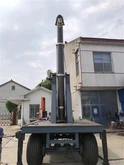
Communications towers are an essential component of modern society, supporting the technology that enables us to globally connect with each other. As the world continues to grow and people become more reliant on technology, the demand for communications towers continues to increase.
Before the installation process begins, it is important to obtain all necessary permits and approvals from relevant authorities. This includes the Federal Communications Commission (FCC), local municipalities, and any other regulatory bodies governing the use of the tower. Additionally, a site survey must be conducted to ensure the location is suitable for installation, taking into consideration factors such as terrain, access, and zoning regulations.
Once the necessary permits and approvals have been obtained, the installation process can begin. The first step is to excavate the site and pour a concrete foundation for the tower to rest on. The size of the foundation will depend on the size and weight of the tower, as well as the soil quality and local weather conditions.
After the foundation has been poured and cured, the tower components can be assembled. The tower typically consists of several sections of metal tubing, which are bolted together one section at a time, starting from the ground up. This requires specialized equipment such as cranes or hoists to lift and secure each section in place. It also requires skilled technicians to ensure that each section is installed correctly and that the tower is level.
Once the tower is fully assembled, the next step is to install the antennas and other equipment needed for wireless communication. This includes radios, amplifiers, and transmitters, as well as coaxial cables and connectors to connect everything together. These components must be installed and positioned properly to ensure optimal signal strength and coverage.
Throughout the installation process, safety is of the utmost importance. Technicians must follow strict safety guidelines to avoid injury or accidents. This includes wearing proper protective gear such as hard hats, safety harnesses, and work boots. A safety plan must also be implemented and followed meticulously to minimize the possibility of accidents.
In conclusion, the installation of a communications tower requires careful planning, the appropriate equipment, and skilled technicians. It is a complex process that involves obtaining permits and approvals, conducting site surveys, pouring a foundation, assembling the tower sections, installing the antennas and other equipment, and adhering to strict safety guidelines. The importance of communications towers cannot be overstated, as they are an essential part of our daily lives, enabling us to stay connected, informed, and entertained.