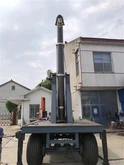
When you're driving down the highway or driving through your city, have you ever noticed a tall tower with equipment on top. Have you ever looked at this structure and asked yourself, "What the hell is that thing for?" These structures serve a very important purpose, they maintain your cellular network. The structure you see is called a "cell phone site" and by extension a "cell phone tower". Although the terms are often used interchangeably, cell towers and cell towers are not the same. A base station consists of antennas and ground equipment, as well as transmitters, receivers, GPS, backup power, base transceiver stations, and other equipment; while a cell phone tower is the physical structure on which the equipment resides.
Cell towers are an integral part of building and maintaining a wireless network. Such wireless networks provide voice and data services to cellular telephone users within a certain distance of cellular towers. Cell towers are abundant in urban areas. While these cell towers may not be as dense as in rural areas, they are still vital for communication purposes.
The towers vary in size, shape and location. Below we discuss some of the different types of cell towers, where they are typically located, what they do, and what types of technology they support.
different types of towers
Cell phone towers come in several different types of structures. Each cell tower serves the same purpose, but the different structures have features adapted to the surrounding land. The four common tower types are as follows: monopole tower, lattice tower, guyed tower and camouflaged tower.
The monopole tower in Figure 1 below is a smooth pole with antennas and other equipment mounted directly on it. Monopole towers are often found in suburban cell towers. Next is the lattice tower in Figure 2 below. They are self-supporting triangular towers that vary in height from 200 to 400 feet. We then pull the wire towers in Figure 4 below. These are a type of lattice tower, taller on average, and rely on guy wires for added stability. Last but perhaps most interesting are camouflaged or invisible towers. An example is Figure 3 below. The tower is specially equipped with different materials to make it blend into its surroundings. Camouflage towers are ideal for communities looking to preserve the natural beauty of the community.